Friday, June 8, 2012

aMUSEing: the Buddha

I've been working with this saying for a few weeks now...here's to those who need to hear it's message, also.

Be well,
Niki


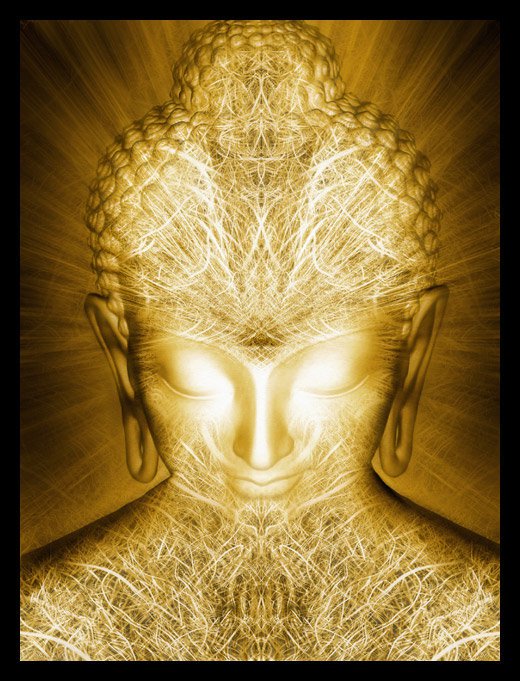
"You can search the whole universe looking for someone more deserving of your Love and Affection than yourself, and you will not find that person anywhere."

                                            - Buddha

Sunday, May 27, 2012

The Discipline to Show Up

I was born 26 years and 26 days ago. Maybe it's the waves of change that have salted the water of my life recently, but this year seems especially celebratory for me. This got me thinking about what has happened to get me here, 26 revolutions around the sun, and very grateful for each one.

It takes about 274 days to grow a human that can very likely survive outside of another person. Note the always exciting feat of birthing this little being - the hours of labor, any post-operatives for baby or mother, etcetera.

In the first few moments of life post-utero, we arrive, charged with the incredible work of taking our first breath. If this doesn't sounds that noteworthy, consider that we basically have to suck air into a dense, fluid filled cavity that is locked shut with the force of hydraulic pressure, through a passage not much bigger than a  coffee-stirring straw...

Approximately 25 million air sacs are contained in a newborn's lungs, all designed to help extract oxygen from the environment in order to fuel so many processes in the body.

This is remarkable and stupefying at once. To consider that at some point in a past that we probably cannot remember, we chose to go through this process...to be born, to exist here..is just mind blowing, unfathomable, too abstract to adequately conceptualize, and maybe even a trigger for skepticism.

I [and you] grew for the better part of a year, the same amount of time it takes to travel millions and millions of miles around the Sun [which is millions and millions times larger than our entire planet]. We breathe, we live, we relate, we change shape. It's remarkable and not always easy.

Sometimes the hardest part of a yoga class is just getting there, of dragging yourself off the couch, out of the warm snug of a lover, away from the interwebs, whatever. Sometimes it's just hard to show up. Sometimes it's easier to finish a to-do list then sit and meditate on the sound of your own breath. Sometimes the hardest part is showing up...but the silver lining is that the really hard part is already over. We've taken the most difficult breath already. All the rest are automatic.

Wednesday, May 2, 2012

How Do You Hold Yourself?

Since my last post, Earth Day and my Birth day have passed, along with several other exciting things. First, I was accepted into the 300 hour teacher training at Black Dog Yoga. This means that in about 1 year I will be a certified 500 hour Registered Yoga Teacher!!! Following this, I began the first step (of many) on this journey 3 days ago, participating in a workshop lead by my mentor, Sigrid Matthews [www.sigridmatthews.com].

Here is some of what I am dissolving from these last few weeks: How do I hold myself? Where do I hold too much? How do I stand in my life, on the Earth, in my body?

Taking from the incredibly precise and concise teaching of my mentor, I have been talking a lot about core alignment in my classes. Specifically, how to connect the abdomen to the rest of the body. "Drop your mid-spine into the floor," while students are on their backs, "move your frontal hip points toward your low ribs," "draw your belly button toward your spine as you exhale," etc. We experienced this a step further in the headstand workshop this past weekend, where Sigrid talked about "suspender abdominals." Simply put, we are closing the ribs, engaging our deepest abdominal muscles, and breathing like a yogi.

It is simple, but not necessarily easy.

I instructed these same cues tonight in a Gentle class where students stay on their backs or bellies the duration of the practice. Several of the students spoke with me after about how much work it is to keep the core connected! It's really true. Even though the body isn't moving in a gross or high-impact way, there is a lot of conditioning and alignment happening on subtle levels. As one student said, "You always feel it the next day."

It is interesting to see how these principles translate across planes, like when you move from your back [where it is easiest to feel your spine grounding], to standing [where you are moving against space]. More often than not, the body will lose the structure over a shorter period of time. Sit up tall where you are right now, and notice how much time passes before you are slouching your shoulders or leaning forward with your chin. What is supporting you? Where do you need more support?

In our yoga practice, we move from the core and aim to clarify this in all of our movements. In our daily life, we also move from a center point; a point of view that supports a belief, an attitude that supports a point of view, a pattern that holds us in a particular shape. Do these things support your neutrality? Do they support your most optimized state of being?

Here recently, I am asking myself all of these questions and not always coming up with solutions. At least I know that much of this will become clear as I continue to practice.

Cheers to studentship!
Monday, April 16, 2012

To Be Broken and Yoga at Once

In spite of Spring just starting, I find that many things are ending. It seems like nearly everyone I have a real conversation with is going through something that has startled their status quo...I've experienced or heard stories of losing loved ones, ending significant relationships, job loss, falling sick or injured. In the same way, new shifts are taking place that are also upsetting equilibrium.

In yoga, we are always talking about opposing forces, recognizing how they create a pulse of juxtaposition, honoring that the imbalance is necessary for the creation of symmetry, respecting the process...there is so much going on at once, on varying levels, and it is easy to get caught up in duality - this or that, etc. Aum offers us a lesson that there is more than just beginning and end, there is also middle and transition. There is process.

The Sanskrit word aum is a three part syllable which is said to encompass every sound in the universe. Each syllable symbolizes a stage in the process of being - beginning, middle, end (there is even a 4th part, the silence afterwards!) Take any moment in your life, take any pose in your practice, and it will fit into aum.

While so many aspects of our lives are coming to clear and seemingly final halts, let's take a moment to look quietly and sense the silence afterwards, to sense what is settling and splitting apart, and to also notice that gray area of transition which is always followed by a new beginning.

Friday, March 30, 2012

Trauma, Loss and Heart Opening


Yesterday a friend of mine came over for dinner after just coming back in town from a funeral. She lost a family member last week in a bizarre and tragic way and shared with me a bit of her experience. While she talked with me, her hand held the space on top of her heart and she mentioned a few times that she could feel her heart aching, like a pain that resonated straight back and between her ribs.

I shared with her that across cultures, when human beings experience a great loss, their body literally curls inward, perhaps as a way to protect the heart from more trauma. The tops of the shoulders and the collarbones fold in towards one another, the upper back rounds and the center of the chest sinks inward toward the back ribs. I explained to her that when people experience a great achievement, their body will move the other way - the shoulders open apart and back and the center of the chest lifts up.

When my friend held her chest at another point in our conversation, she said, "I feel like my heart is literally trying to break open and get bigger to take this all in,"

In the last two months, I have experienced waves of loss that has left no part of my life untouched. And often during this time, I've had exchanges with people, sometimes strangers, who tell me of a sudden loss in their lives as well and sometimes in the same conversation, there is a recognition that there is also an opening or an opportunity somewhere else...and this reminds me that loss and growth happen symbiotically. Just like the breath, when you lose space on the exhale, it makes room for expansion on the inhale.

I'm reminded of the sanskrit word for the heart chakra, anahata, which means "unstruck," or "unbeaten." My teacher explained this to me once as our hearts being like a beautiful emerald stone, strong and solid and completely unscratched. She explained that regardless of what kind of trauma we endure in our lives, no matter the heart ache, the loss, the suffering we experience or cause in our lives, within all of it there is at least one space that goes unbent, unmarred, unaffected by the friction of our lives, that there is one space inside each of us that goes untouched by the pain and the worry and the weight of our human experience.

Tonight I am moving my heart-space open in spite of the loss I feel, and the heaviness of that on my shoulders and head. There is a piece of me that remains intact, unharmed, beautifully okay. So tonight I will breathe into that space, trusting that the weight of life that I am more aware of right now will grow lighter and become easier to breath through.

aMUSEing: a poem

Impermeability

And here's one of the troubles:
keeping so busy inside and out
that we define ourselves by the known,
the too well known,
the what-we-think-we-know known,
the misperceptions,
the misapprehensions,
the clever enunciations,
intelligent articulations,
a crisscross of wires
so thick
that no light shows through.
That's the trouble.
Becoming as dense as a traffic jam,
so the wind can't blow through.
No wonder God laughs
when we complain we can't
hear him.

~ Alice Klein

Wednesday, March 21, 2012

The Leg Work [of Shoulder Work]

This past week, my classes have revolved around the same theme - that yoga offers us an opportunity to learn (and observe) how we can support ourselves through challenging and strenuous experiences.

Hatha yoga is all about the experience. I feel that people who are drawn to this leg of yoga are drawn in part because they need the visceral effect in order to have a shift in perspective. To help facilitate this, I've been working up to a variation on the plank -chatarunga dandasana-bhujangasana sequence, focusing on alignment in the upper back and shoulders. Especially challenging for women because we lack an upper body strength privy to men, this sequence clearly demonstrates how empowering it can be to find support against the weight of gravity. When we are standing (mostly) on our hands, it's easy to feel how much weight we carry in ourselves, and what a relief it can be once we learn how to support it properly.

What I've been seeing is that many people 1.) forget to breathe 2.) don't go forward far enough because they believe they'll face-plant on their way down or 3.) both.

Here's the thing: we need breath to support the physical body and we need to move forward in order to move through challenging things.

This quote comes to mind from Rainer Maria Rilke in "Letters to a Young Poet," where he is speaking about being alone on a difficult journey:

" And you should not let yourself be confused in your solitude by the fact that you want to move out of it. This very wish, if you use it calmly and prudently and like a tool, will help you spread out your solitude over a great distance. Most people have (with the help of conventions) turned their solutions toward what is easy and toward the easiest side of the easy; but it is clear that we must trust in what is difficult..."

It is fascinating for me to watch this take shape for my students, and to hear their responses...one long time student of yoga told me this past weekend that of all the times she has done these poses, she didn't know that she could feel better in them. What an opening for her!

How many times do we find ourselves in an experience (a conversation, a circumstance) that we have been in many times before, and sense that it can be more simple, that it can feel better, that we can breathe easier if we knew how to do something differently?

May we all trust to move forward in our journey, and do the difficult work of learning how to support ourselves.